
I specialize in Kentucky First Time Homebuyers FHA, VA, USDA & Rural Housing, KHC and Fannie Mae mortgage loans. I have helped over 900 Kentucky families buy their first home and refinance their current mortgage for a lower rate; Kentucky First time buyers $0 down still available with down payment assistance with KHC. Free Mortgage applications same day approvals. Web site is not endorsed by the FHA, VA, USDA govt agency. Text/call 502-905-3708 kentuckyloan@gmail.com NMLS 57916 NMLS ID 1364
Louisville Kentucky Mortgage Lender for FHA, VA, KHC, USDA and Rural Housing Kentucky Mortgages: Kentucky Mortgage Rates and Home Loan Options
Louisville Kentucky Mortgage Lender for FHA, VA, KHC, USDA and Rural Housing Kentucky Mortgages: Kentucky Mortgage Rates and Home Loan Options: Kentucky Mortgage Rates and Home Loan Options Kentucky is known for its native bluegrass pastures, thoroughbred horses, and blueg...

 I have helped over 1300 Kentucky families buy or refinance their home over the last 20 years. Realizing that this is one of the biggest, most important financial transactions a family makes during their lifetime, I always feel honored and respected when I am chosen to originate their personal home loan. You can count on me to deliver on what I say, and I will always give you honest, up-front personal attention you deserve during the loan process.
I have several advantages over the large banks in town. First, I can search and negotiate for your loan options through several different mortgage companies across the country to get you the best deal locally. Where most banks will offer offer you their one set of loan products. I have access to over 10 different mortgage companies to broker your loan through to get you the best pricing and loan products that may not fit into the bank's program due to credit, income, or other underwriting issues.
You will not get lost in the shuffle like most borrowers do at the mega banks; you're just not a number at our company, you are a person and we will treat you like one throughout the entire process.
I have helped over 1300 Kentucky families buy or refinance their home over the last 20 years. Realizing that this is one of the biggest, most important financial transactions a family makes during their lifetime, I always feel honored and respected when I am chosen to originate their personal home loan. You can count on me to deliver on what I say, and I will always give you honest, up-front personal attention you deserve during the loan process.
I have several advantages over the large banks in town. First, I can search and negotiate for your loan options through several different mortgage companies across the country to get you the best deal locally. Where most banks will offer offer you their one set of loan products. I have access to over 10 different mortgage companies to broker your loan through to get you the best pricing and loan products that may not fit into the bank's program due to credit, income, or other underwriting issues.
You will not get lost in the shuffle like most borrowers do at the mega banks; you're just not a number at our company, you are a person and we will treat you like one throughout the entire process.
Louisville Kentucky Mortgage Lender for FHA, VA, KHC, USDA and Rural Housing Kentucky Mortgages: Key ways to get your best rate possible on your Ke...
Louisville Kentucky Mortgage Lender for FHA, VA, KHC, USDA and Rural Housing Kentucky Mortgages: Key ways to get your best rate possible on your Ke...: Kentucky Mortgage Rates Key ways to get your best rate possible on your Kentucky Home loan Historically speaking, current mortgage rates ...
I have helped over 1300 Kentucky families buy or refinance their home over the last 20 years. Realizing that this is one of the biggest, most important financial transactions a family makes during their lifetime, I always feel honored and respected when I am chosen to originate their personal home loan. You can count on me to deliver on what I say, and I will always give you honest, up-front personal attention you deserve during the loan process.
I have several advantages over the large banks in town. First, I can search and negotiate for your loan options through several different mortgage companies across the country to get you the best deal locally. Where most banks will offer offer you their one set of loan products. I have access to over 10 different mortgage companies to broker your loan through to get you the best pricing and loan products that may not fit into the bank's program due to credit, income, or other underwriting issues.
You will not get lost in the shuffle like most borrowers do at the mega banks; you're just not a number at our company, you are a person and we will treat you like one throughout the entire process.
4 Things Every Borrower Needs to Know to Get Approved for a Mortgage Loan In Kentucky
Over 900 Kentucky Families have used me for their mortgage loan in Kentucky for the last 20 years.
I hope you find this website informative and gives you confidence in making the right selection for your next home loan. I offer Kentucky FHA, VA, USDA, Fannie Mae and KHC Down payment Assistance Home loans in every part of the state.

There are 4 basic things that a borrower needs to show a lender in order to get approved for a mortgage in Kentucky for 2024.
1. Income
You need income. You need to be able to afford the home. But what is acceptable income? Let’s just say that there are two ratios mortgage underwriters look at to qualify you for mortgage payment:
First Ratio – The first ratio, top ratio or housing ratio. Basically, that means out of all the gross monthly income you make, that no more that X percent of it can go to your housing payment. The housing payment consists of Principle, Interest, Taxes and Insurance.
Whether you escrow or not every one of these items are factored into your ratio. There are a lot of exceptions to how high you can go, but let’s just say that if your ratio is 33% or less, generally, across the board, you’re safe.
Second Ratio- The second ratio, bottom ratio or debt ratio includes the housing payment, but also adds all of the monthly debts that the borrower has. So, it includes housing payment as well as every other debt that a borrower may have.
This would include, Auto loans, credit cards, student loans, personal loans, child support, alimony…. basically any consistent outgoing debt that you’re paying on. Again, if you’re paying less than 45% of your gross monthly income to all of the debts, plus your proposed housing payment, then……generally, you’re safe. You can go a lot higher in this area, but there are a lot of caveats when increasing your back ratio.
What qualifies as income?
Basically, it’s income that has at least a proven, two-year history of being received and pretty high assurances that the income is likely to continue for at least three years. What’s not acceptable? Unverifiable cash income, short term income and income that’s not likely to continue like unemployment income, student loan aid, VA education benefits, or short-term disability are not allowed for a mortgage loan.
2. Assets
What the mortgage underwriter is looking for here is how much can you put down and secondly, how much will you have in reserves after the loan is made to help offset any financial emergencies in the future.
Do you have enough assets to put the money forth to qualify for the down payment that the particular program asks for?
The only 100% financing or no money down loans still available in Kentucky for home buyers are available through USDA, VA, and KHC or Kentucky Housing Loans. Most other home buyers that don't qualify for the no money down home loans mentioned above, will turn to the FHA program.
FHA loans currently requires a 3.5% down payment and Fannie Mae, or Conventional loans require a 3% to 5% down payment. The more you put down, the better your rate and terms usually and your chances of qualifying.
Kentucky Home buyers that have access to putting down at least 5% or more, will usually turn to Fannie Mae or Freddie Mac mortgage programs so they can get better pricing when it comes to mortgage insurance.
These assets need to be validated through bank accounts, 401k or retirements account and sometimes gifts from relatives or employer. Can you borrow the down payment? Sometimes.
Generally, if you’re borrowing a secured loan against a secured asset you can use that. But rarely can cash be used as an asset.
FHA will allow for gifts from relatives for down payments with little as 3.5% down but Fannie Mae will require a 20% down payment when a gift is being used for the down payment on the home.
The down payment scenarios listed above are for Kentucky Primary Residences only. There are stricter down payment requirements for investment homes made in Kentucky.
580 to 620 is the bottom score (again with few exceptions) that lenders will permit. Below a 620, then you have to look at doing a FHA loan or VA loan if you are a veteran. Even at 620, people consider you a higher risk that other folks and are going to penalize you or your borrower with a more expensive loan. 720 is when you really start to get in the “as a lender we love you” credit score. 760 is even better.
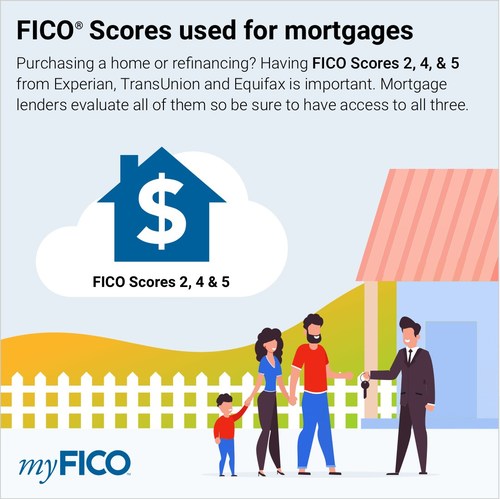
Watch your credit scores carefully. You have three credit scores, and the lender will take your middle score. For example, let's say you have a 590 on Transunion, 679 on Experian, and a 618 on Equifax. Then your middle qualifying credit score will be 618 credits score.
If you absolutely cannot get your credit scores up to 620, then FHA will be a good option for you. FHA states that if your fico credit score is 580 or above, they will allow for a 3.5% down payment, and if below 580, you will need 10% down payment.
There are a lot of mortgage lenders that will not go below 580 to 620 range, so keep that in mind when you are shopping for a mortgage lender, because they create credit overlays.
Kentucky FHA Mortgage Loans currently requires 3 years removal from a foreclosure or short sale and 2 years on a bankruptcy with good reestablished credit.
Kentucky Fannie Mae Mortgage Loans currently requires 4 years removal from a bankruptcy, and 7 years on a foreclosure.
Kentucky VA Mortgage Loans currently requires 2 years removal from a bankruptcy or foreclosure with good, reestablished credit.
Kentucky USDA loans require 3 years removal from bankruptcy and foreclosure with good reestablished credit.
FHA loans currently requires a 3.5% down payment and Fannie Mae, or Conventional loans require a 3% to 5% down payment. The more you put down, the better your rate and terms usually and your chances of qualifying.
Kentucky Home buyers that have access to putting down at least 5% or more, will usually turn to Fannie Mae or Freddie Mac mortgage programs so they can get better pricing when it comes to mortgage insurance.
These assets need to be validated through bank accounts, 401k or retirements account and sometimes gifts from relatives or employer. Can you borrow the down payment? Sometimes.
Generally, if you’re borrowing a secured loan against a secured asset you can use that. But rarely can cash be used as an asset.
FHA will allow for gifts from relatives for down payments with little as 3.5% down but Fannie Mae will require a 20% down payment when a gift is being used for the down payment on the home.
The down payment scenarios listed above are for Kentucky Primary Residences only. There are stricter down payment requirements for investment homes made in Kentucky.
3. Credit
580 to 620 is the bottom score (again with few exceptions) that lenders will permit. Below a 620, then you have to look at doing a FHA loan or VA loan if you are a veteran. Even at 620, people consider you a higher risk that other folks and are going to penalize you or your borrower with a more expensive loan. 720 is when you really start to get in the “as a lender we love you” credit score. 760 is even better.
Watch your credit scores carefully. You have three credit scores, and the lender will take your middle score. For example, let's say you have a 590 on Transunion, 679 on Experian, and a 618 on Equifax. Then your middle qualifying credit score will be 618 credits score.
If you absolutely cannot get your credit scores up to 620, then FHA will be a good option for you. FHA states that if your fico credit score is 580 or above, they will allow for a 3.5% down payment, and if below 580, you will need 10% down payment.
There are a lot of mortgage lenders that will not go below 580 to 620 range, so keep that in mind when you are shopping for a mortgage lender, because they create credit overlays.
Kentucky FHA Mortgage Loans currently requires 3 years removal from a foreclosure or short sale and 2 years on a bankruptcy with good reestablished credit.
Kentucky Fannie Mae Mortgage Loans currently requires 4 years removal from a bankruptcy, and 7 years on a foreclosure.
Kentucky VA Mortgage Loans currently requires 2 years removal from a bankruptcy or foreclosure with good, reestablished credit.
Kentucky USDA loans require 3 years removal from bankruptcy and foreclosure with good reestablished credit.

Which credit score is used to qualify for a Mortgage loan in Kentucky?
4. Appraisal
Generally, there’s nothing you can do to affect this. Bottom line here is…..”is the value of the house at least the value of what you’re paying for it?” If not, then not good things start to happen. Generally you’ll find less issues with values on purchase transactions, because, in theory, the realtor has done an accurate job of valuing the house prior to taking the listing. The big issue comes in refinancing. In purchase transactions, the value is determined as the
Lower of the value or the contract price!!!
That means that if you buy a $1,000,000 home for $100,000, the value is established at $100,000. Conversely, if you buy a $200,000 home and the value comes in at $180,000 during the appraisal, then the value is established at $180,000. Big issues….Talk to your loan officer.
For each one of these boxes, there are over 1,000 things that can effect if a borrower has reached the threshold to complete that box. Soo…..talk to a great loan officer. There are so many loan officers that don’t know what they’re doing. But, conversely, there’s a lot of great ones as well. Your loan is so important! Get a great lender so that you know, for sure, that the loan you want, can be closed on!
Popular Kentucky Home Loan Programs below:
Conventional Loan
• At least 3%-5% down• Closing costs will vary on which rate you choose and the lender. Typically the higher the rate, the lesser closing costs due to the lender giving you a lender credit back at closing for over par pricing. Also, called a no-closing costs option. You have to weigh the pros and cons to see if it makes sense to forgo the lower rate and lower monthly payment for the higher rate and less closing costs.
Fico scores needed start at 620, but most conventional lenders will want a higher score to qualify for the 3-5% minimum down payment requirements Most buyers using this loan have high credit scores (over 720) and at least 5% down.
The rates are a little higher compared to FHA, VA, or USDA loan but the mortgage insurance is not for life of loan and can be rolled off when you reach 80% equity position in home.
Conventional loans require 4-7 years removed from Bankruptcy and foreclosure.
2024 Baseline Kentucky Mortgage Conforming Loan Limit Rises to $766,550
1 $766,550
2 $981,500
3 $1,186,350
4 $1,474,400
The FHFA determines the conforming loan limit each year, basing it on the average U.S. home value over the past four quarters.
They utilize their own Federal Housing Finance Agency House Price Index (FHFA HPI®) to determine how much home prices have risen in the preceding 12 months.
Kentucky USDA Rural Housing Program
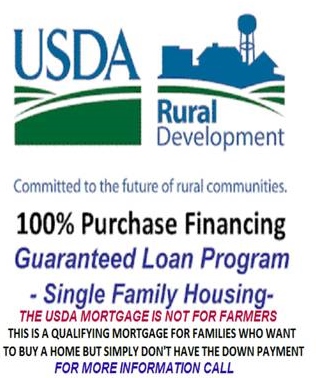
If you meet income eligibility requirements and are looking to settle in a rural area, you might qualify for the KY USDA Rural Housing program. The program guarantees qualifying loans, reducing lenders’ risk and encouraging them to offer buyers 100% loans. That means Kentucky home buyers don’t have to put any money down, and even the “upfront fee” (a closing cost for this type of loan) can be rolled into the financing.
Fico scores ****.usually wanted for this program center around 620 range, with most lenders wanting a 640 score so they can obtain an automated approval through GUS. GUS stands for the Guaranteed Underwriting system, and it will dictate your max loan pre-approval based on your income, credit scores, debt to income ratio and assets.
They also allow for a manual underwrite, which states that the max house payment ratios are set at 29% and 41% respectively of your income.
They loan requires no down payment, and the current mortgage insurance is 1% upfront, called a funding fee, and .35% annually for the monthly mi payment. Since they recently reduced their mi requirements, USDA is one of the best options out there for home buyers looking to buy in an rural area.
A rural area typically will be any area outside the major cities of Louisville, Lexington, Paducah, Bowling Green, Richmond, Frankfort, and parts of Northern Kentucky .
There is a map link below to see the qualifying areas.
Income Limits for: Most Locations
Household of 1-4
$109,500
- OR -
Household of 5-8*
$146,600
For non-specific areas, the income limits are $109,850 for a 1-4 member household and $145,000 for a 5-8 member household.
*If a household exceeds 8 members, each additional member receives 8% of the 4-person income limit for their area towards the total.
Some Northern Kentucky Counties can allow for higher incomes.
Eligibility Requirements – Kentucky---Boone, Kenton, Campbell, Gallatin,
For a family of 1-4 in Kentucky, the average household income limit for a USDA loan is about $109,850; for a family of 5 or more, the limit can be as high as $145,000.
The Northern Kentucky Counties (***) of Boon, Kenton, Campbell, Bracken, Gallatin, and Pendleton are $109,850 for a household of four or less and up to $145,000 for a family of five or more.
USDA Eligible Areas in Northern Kentucky
Burlington
Hebron
Independence
Walton
Alexandria
Highland Heights
Cold Springs
Grant County
Owen County
Pendleton County
Burlington
Hebron
Independence
Walton
Alexandria
Highland Heights
Cold Springs
Grant County
Owen County
Pendleton County
USDA Income Limits
Boone, Kenton & Campbell Counties (N. KY)
$109,850 (family size 1-4)
$145,000 (family size 5 or more)
Boone, Kenton & Campbell Counties (N. KY)
$109,850 (family size 1-4)
$145,000 (family size 5 or more)
Grant, Owen & Pendleton Counties (N. KY)
$103,500 (family size 1-4)
$136,600 (family size 5 or more)
$103,500 (family size 1-4)
$136,600 (family size 5 or more)
USDA requires 3 years removed from bankruptcy and foreclosure.
There is no max USDA loan limit.
 |
| Add caption |
Kentucky FHA Loan
FHA loans are good for home buyers with lower credit scores and no much down, or with down payment assistance grants. FHA will allow for grants, gifts, for their 3.5% minimum investment and will go down to a 580 credit score.
The current mortgage insurance requirements are kind of steep when compared to USDA, VA , but the rates are usually good so it can counteracts the high mi premiums.
As I tell borrowers, you will not have the loan for 30 years, so don’t worry too much about the mi premiums.
The mi premiums are for life of loan like USDA.
FHA requires 2 years removed from bankruptcy and 3 years removed from foreclosure.
The new forward mortgage loan limits are effective for FHA case numbers assigned on or after January 1, 2024:
| Property Size | Low-Cost Area “Floor” | High-Cost Area “Ceiling” | Alaska, Hawaii, Guam, and U.S. Virgin Islands “Ceiling”1 |
| One-Unit | $498,257 | $1,149,825 | $1,724,725 |
| Two-Units | $637,950 | $1,472,250 | $2,208,375 |
| Three-Units | $771,125 | $1,779,525 | $2,669,275 |
| Four-Units | $958,350 | $2,211,600 | $3,317,400 |
Kentucky VA Loan
VA loans are for veterans and active duty military personnel. The loan requires no down payment and no monthly mi premiums, saving you on the monthly payment. It does have an funding fee like USDA, but it is higher starting at 2.3% for first time use, and 3.6% for second time use. The funding fee is financed into the loan, so it is not something you have to pay upfront out of pocket.VA loans can be made anywhere, unlike the USDA restrictions, and there is no income household limit.
Most VA lenders I work with will want a 580 credit score even though on paper, VA says they don't have a minimum credit score.
VA requires 2 years removed from bankruptcy or foreclosure.
VA Loan Limits for 2024 in Kentucky
As announced previously by VA in Circular 26-19-30 (which provides interim guidance on implementing "The Blue Water Navy Vietnam Veterans Act of 2019") the conforming loan limit cap on guarantees was removed for Veterans with full entitlement. For Veterans who have previously used entitlement and the entitlement has not been restored, the maximum amount of guaranty entitlement available to the Veteran (for a loan above $144,000) is 25 percent of the conforming loan limit reduced by the amount of entitlement previously used (not restored) by the Veteran.
As a reminder, Veterans are able to use their VA Home Loan Guaranty benefit regardless of loan amount, but in order to purchase homes with loan amounts above the conforming loan limits, Veterans with partial entitlement may be required to make a down payment on amounts in excess of the conforming loan limit. Regardless of full or partial entitlement, the VA guaranty plus any required down payment must total 25% of the loan amount.
Kentucky Down Payment Assistance
KHC recognizes that down payments, closing costs, and prepaids are stumbling blocks for many potential home buyers. We offer a special loan program to help with those. Your KHC-approved lender can help you apply.
Regular DAP
- Purchase price up to $481,176 with Secondary Market or Mortgage Revenue Bond (MRB) income limits.
- Assistance in the form of a loan up to $10,000 in $100 increments.
- Repayable over a 10-year term at 3.75 percent.
- Available to all KHC first-mortgage loan recipients.
Kentucky First Time Home Buyer Common Questions and Answers below:👇
∘ What kind of credit score do I need to qualify for different first time home buyer loans in Kentucky?
Answer. Most lenders will wants a middle credit score of 620 to 640 for KY First Time Home Buyers looking to go no money down. The two most used no money down home loans in Kentucky being USDA Rural Housing and KHC with their down payment assistance will want a 620 to 640 middle score on their programs.
If you have access to 3.5% down payment, you can go FHA and secure a 30 year fixed rate mortgage with some lenders with a 580 credit score. Even though FHA on paper says they will go down to 500 credit score with at least 10% down payment, you will find it hard to get the loan approved because lenders will create overlays to protect their interest and maintain a good standing with FHA and HUD.
Another popular no money down loan is VA. Most VA lenders will want a 620 middle credit score but like FHA, VA on paper says they will go down to a 500 score, but good luck finding a lender for that scenario.
A lot of times if your scores are in the high 500’s or low 600’s range, we can do a rapid rescore and get your scores improved within 30 days.
∘ Does it costs anything to get pre-approved for a mortgage loan?
Answer: Most lenders will not charge you a fee to get pre-approved, but some lenders may want you to pay for the credit report fee upfront. Typically costs for a tri-merge credit report for a single borrower runs about $50 or less. Maybe higher if more borrowers are included on the loan application.
∘ How long does it take to get approved for a mortgage loan in Kentucky?
Answer: Typically if you have all your income and asset documents together and submit to the lender, they typically can get you a pre-approval through the Automated Underwriting Systems within 24 hours. They will review credit, income and assets and run it through the different AUS (Automated Underwriting Systems) for the template for your loan pre-approval. Fannie Mae uses DU, or Desktop Underwriting, FHA and VA also use DU, and USDA uses a automated system called GUS. GUS stands for the Guaranteed Underwriting System.
If you get an Automated Approval, loan officers will use this for your pre-approval. If you have a bad credit history, high debt to income ratios, or lack of down payment, the AUS will sometimes refer the loan to a manual underwrite, which could result in a longer turn time for your loan pre-approval answer
∘ Are there any special programs in Kentucky that help with down payment or no money down loans for KY First Time Home Buyers?
Answer: There are some programs available to KY First Time Home Buyers that offer zero down financing: KHC, USDA, VA, Fannie Mae Home Possible and HomePath, HUD $100 down and City Grants are all available to Kentucky First Time Home buyers if you qualify for them. Ask your loan officer about these programs
∘ When can I lock in my interest rate to protect it from going up when I buy my first home?
Answer: You typically can lock in your mortgage rate and protect it from going up once you have a home picked-out and under contract. You can usually lock in your mortgage rate for free for 90 days, and if you need more time, you can extend the lock in rate for a fee to the lender in case the home buying process is taking a longer time. The longer the term you lock the rate in the future, the higher the costs because the lender is taking a risk on rates in the future.
Interest rates are kinda like gas prices, they change daily
∘ How much money do I need to pay to close the loan?
Answer: Depending on which loan program you choose, the outlay to close the loan can vary. Typically you will need to budget for the following to buy a home: Good faith deposit, usually less than $500 which holds the home for you while you close the loan. You get this back at closing; Appraisal fee is required to be paid to lender before closing.
Typical costs run around $500-$650 for an appraisal fee; home inspection fees. Even though the lender’s programs don’t require a home inspection, a lot of buyers do get one done. The costs for a home inspection runs around $300-$400.
Lastly, termite report. They are very cheap, usually $50 or less, and VA requires one on their loan programs. FHA, KHC, USDA, Fannie Mae does not require a termite report, but most borrowers get one done.
There are also lender costs for title insurance, title exam, closing fee, and underwriting fees that will be incurred at closing too. You can negotiated the seller to pay for these fees in the contract, or sometimes the lender can pay for this with a lender credit. The lender has to issue a breakdown of the fees you will incur on your loan pre-approval.
Answer: Most lenders will honor your loan pre-approval for 120 days. After that, they will have to re-run your credit report and ask for updated pay stubs, bank statements, to make sure your credit quality and income and assets has not changed from the initial loan pre-approval.
Answer: The general rule for most FHA, VA, KHC, USDA and Fannie Mae loans is that we run your loan application through the Automated Underwriting systems, and it will tell us your max loan qualifying ratios.
There are two ratios that matter when you qualify for a mortgage loan. The front-end ratio, is the new house payment divided by your gross monthly income. The back-end ratio, is the new house payment added to your current monthly bills on the credit report, to include child support obligations and 401k loans.
Car insurance, cell phone bills, utilities bills does not factor into your qualifying rations.
If the loan gets a refer on the initial desktop underwriting findings, then most programs will default to a front end ratio of 31% and a back-end ratio of 43% for most government agency loans that get a refer. You then take the lowest payment to qualify based on the front-end and back-end ratio.
So for example, let’s say you make $3000 a month and you have $400 in monthly bills you pay on the credit report. What would be your maximum qualifying house payment for a new loan?
Take the $3000 x .43%= $1290 maximum back-end ratio house payment. So take the $1290-$400= $890 max house payment you qualify for on the back-end ratio.
Then take the $3000 x .31%=$930 maximum qualifying house payment on front-end ratio.
So now you know! The max house payment you would qualify would be the $890, because it is the lowest payment of the two ratios.

Just like the stock market, mortgage rates change throughout the day. Mortgage rates you see today may not be available tomorrow. If you are in the market for a mortgage loan, be sure to check the current rates being offered by lenders. If you have already done your research and have found your dream home consider locking in your rate as soon as possible.
2. Different Lenders Charge Different Fees
Don’t expect every lender to charge the same fees for a mortgage loan. Every lender structures their fees differently, which is why it is important to shop with at least 3 lenders to compare. Next time you apply for a mortgage loan pay attention to the rates, points being charged and closing costs.
3. Lenders Can Sell Your Loan to Another Bank
Many borrowers have experience getting a mortgage loan with a certain lender only to find out that the loan has been sold to another bank. This occurs because lenders need to free up their liabilities in order to make room to give out more loans. This does not affect your mortgage whatsoever, but it’s important to pay close attention to your mortgage statement and any correspondence you receive in the mail to make sure you do not make payments to the wrong bank.
4. Your Middle Credit Score Matters
When you apply for a mortgage loan, the lender will pull your credit scores from three credit bureaus (Transunion, Equifax and Experian) to help them determined if you are credit worthy. Your middle score of the three is what lenders will use for loan qualification. However, the underwriter will review all three scores as part of the loan underwriting process. If you pull your own credit score through a website online, the credit scores displayed to you may be different than what lenders use because they use different reporting systems.
5. You Can Refinance Your Home Loan Anytime
You can refinance your mortgage anytime, but it doesn’t necessarily mean you should. Think about why you want to refinance. Is because you want to lower your monthly payments, to change the type of loan you are in or to take cash out from your equity? Whatever the reason is, make sure that it makes financial sense.
6. You Can Get a Mortgage Loan After a Foreclosure
Many homeowners have experienced a foreclosure after the recent mortgage crisis. There is good news for these borrowers because they can get a mortgage loan after foreclosure. There are waiting periods involved, for example, to apply for an FHA loan you must wait three years after foreclosure to apply. If you want to get a conventional loan the waiting period is seven years from foreclosure. For those seeking a VA loan, the waiting period is two-years.
There are exceptions to the waiting periods, but you have to show the lender that your foreclosure was caused by an event outside your control, such as losing your job or being seriously ill.
8. Good Credit Allows you to Get Better Mortgage Rates
Good credit scores mean a better rate in any type of loan, especially a mortgage loan. Your credit heavily impacts the type mortgage loan you will qualify for. To maintain a good credit report, make sure you monitored it closely. One of the advantages to good credit is that more banks will want to compete for your business, therefore giving you leverage to negotiate the closing costs.
9. Know Your Annual Percentage Rate (APR)
Knowing your APR will allow you see the true cost of your loan. While the interest rate shows the annual cost of your loan, the APR includes other fees such as origination points, admin fees, loan processing fees, underwriting fees, documentation fees, private mortgage insurance and escrow fees.
There may be more or less fees included in the ARP from what we mentioned. To be sure what fees are included in the APR, ask your lender to give you a breakdown of the closing costs included.
10. You Can Always Reduce Closing Costs
One way to reduce closing costs is to have the sellers contribute towards the closing costs when purchasing your home. This can be negotiated between the buyer and the sellers in the purchase contract. The amount the seller can contribute will depend on the type of loan. Another way to save on closing costs is to have the lender give you a credit to cover out of pocket loan costs.

We just moved here the first of January in 2017 from Ohio to the Louisville, KY area and we found Joel's website online. He was quick to respond to us and got back the same day on our loan approval. He was very knowledgeable about the local market and kept us up-to date throughout the loan process and was a pleasure to meet at closing. Would recommend his services.
Angela Forsythe
"We were searching online for mortgage companies in Louisville, Ky locally to deal with and found Joel's website, and it was a godsend. He was great to work with, and delivered on everything he said he would do. I ended up referring my co-worker at UPS, and she was very pleased with his service and rates too. Would definitely vouch for him." September 2016
Monica Leonhardt
"We contacted Joel back in July 2011 to refinance our Mortgage and he was great to work with. We contacted several lenders locally and online, and most where taking almost 60 days to close a refinance, Joel got it done in 23 days start to finish, I would definitely recommend him. He got us 3.75% with just $900 in closing costs on our FHA Streamline loan.
Kaylee Griffin
“Joel is one of the best Mortgage Brokers I have ever worked with in my sixteen years in the real estate and mortgage business.” May 25, 2010
Tim Beck
“Joel has always worked very hard to keep his word and to work out seasonable solutions to difficult problems. He is truly an expert in FHA and other type loans.” September 1, 2010
Nancy Nally
“I have worked with Joel since 1998. He is a great loan professional.” I refer most of my Louisville, Kentucky area home buyers to him and he always take special care of them. August 23, 2012
Jon Clark
“Joel Lobb is a real professional in the lending industry, with many years of experience, he is the one to go to for any mortgage lending needs.” August 22, 2011
RICHARD VOLZ , Residential Sales , Remax Foursquare Realty
“When looking to purchase our new home in 2006, I had the pleasure of meeting Joel Lobb. Not only was he personable and easy to reach, he was extremely knowledgeable in his field and made sure to find us the best rate and a top notch mortgage company. We were able to complete the process in less than 3 weeks with his expertise. I find Joel to have the utmost high integrity and I recommend him to anyone who say's they are need of mortgage assistance. He is also fantastic and keeping everyone up to date on the latest in the housing industry through his twitter posts. He provided great results for our family and we still communicate to this day!” August 21, 2010
Stacie Drake
"We first use Joel on our new home purchase in 2007 in St Matthews, Kentucky area and he was great to work with. We have since refinanced our home with him in 2010 when rates got really low and he has always delivered on what he says. I could not imagine using anyone else."
Melody Glasscock
Absolutely Amazing!! I emailed Joel after I had just got a denial from a bank and just thought i would try to get some advice on what my next steps would be to get a house. I honestly didn't expect to even get a reply because my credit is not great. That was about a week and a half ago. I just signed a contract on a house last night. ONLY because of Joel Lobb. He even worked with us throughout the weekend, which shocked me. Best decision I have ever made. THANK YOU SO MUCH FOR WORKING WITH US THROUGHOUT THE ENTIRE PROCESS.
Cee Belisle
Contacted him about buying a home and he was great to work with. I was moving to Louisville Ky to take a new job and he walked me through the entire process. He explained to me all the different options for FHA, VA, USDA mortgage loans and credit score requirements versus Fannie Mae. Since I was a first time home buyer I needed alot of help and guidance. I would definitely recommend him. Fast to respond and available to answer questions that I or my realtor had after hours.
Anderson Johnson
We moved from Michigan to Northern Kentucky area and we were really impressed. We got a USDA loan no money down and closed in less than 3.5 weeks. We shopped around online with other lenders but Joel was always first to respond and his rates were just a little better than other lenders. He kept us informed through the process along with our realtor and there was absolutely no surprises like we heard from other co-workers and friends that they experienced in their loan process. We have already referred another co-worker to Joel . He's AWESOME
Betty Parsons
Wow, what a great loan officer. I was referred to him by our agent and he was great to work with. We used him for a USDA no money down loan in Shelby County and we were really impressed. We were afraid we could not buy a home since we did not have money saved for a down payment, but Joe l was able to get us a zero down loan and we even got our appraisal fee and good faith deposit back at closing. We actually got money back at closing!!! I Can't think him enough. Our family moved from our apartment in the south end of town to get our own home with 5 acres for our kids and 2 dogs, at a payment that is equal to our rent payment also. .Thanks Again Joel. May god bless you
Patty Locker
We contacted Joel about buying a house on our move from Ohio for my husband's job transfer with Ford. We put a lot of trust in him since we were new to the area and first time home buyers in the Louisville KY market, and he always delivered on what he said. It took us a while to find a home due to the lack of homes, but once we got one, he was always quick to respond our questions via text or email ,and kept us informed through the process. We got to meet him at the closing and he was super nice and even got us a closing gift for our home which we didn't expect at all. Super nice guy 😀!!! I would definitely recommend him for a local Home loan in the Louisville area.
Pam Dolby
I got a VA loan with Joel and he was great. He is an ex-army guy so he could relate to my past experiences of being a veteran and moving around the country a lot. I had some credit issues that required a little extra work but Joel was able to find A VA lender to approve my situation as far as having past bad credit problems and a lower credit score. We closed yesterday on our home here in Louisville and we could not be happier. We finally have a home of our own thanks to Joel . I would definitely recommend him for a mortgage loan. Great experience and closed 8 days before expected close date so we were able to move in early.
John Sanger
I contacted Joel about the $10,000 KY Housing Grant last month and we were able to get it and I just closed on my home. He was great to work with and if you are a first time home buyer here in Louisville, I would definitely contact him. I met him at his office and he was very nice and knowledgeable and kept me informed through the process. No surprises either so I was very happy. I am new homeowner thanks to Joel .
Chelsea Martin
Joel Lobb (NMLS#57916)
Senior Loan Officer
American Mortgage Solutions, Inc.
10602 Timberwood Circle Suite 3
Louisville, KY 40223
Company ID #1364 | MB73346
Text/call 502-905-3708
kentuckyloan@gmail.com
If you are an individual with disabilities who needs accommodation, or you are having difficulty using our website to apply for a loan, please contact us at 502-905-3708.
Disclaimer: No statement on this site is a commitment to make a loan. Loans are subject to borrower qualifications, including income, property evaluation, sufficient equity in the home to meet Loan-to-Value requirements, and final credit approval. Approvals are subject to underwriting guidelines, interest rates, and program guidelines and are subject to change without notice based on applicant's eligibility and market conditions. Refinancing an existing loan may result in total finance charges being higher over the life of a loan. Reduction in payments may reflect a longer loan term. Terms of any loan may be subject to payment of points and fees by the applicant Equal Opportunity Lender. NMLS#57916http://www.nmlsconsumeraccess.org/
NMLS Consumer Access for Joel Lobb
Accessibility for Website
Privacy Policy

There are also lender costs for title insurance, title exam, closing fee, and underwriting fees that will be incurred at closing too. You can negotiated the seller to pay for these fees in the contract, or sometimes the lender can pay for this with a lender credit. The lender has to issue a breakdown of the fees you will incur on your loan pre-approval.
How long is my pre-approval good for on a Kentucky Mortgage Loan?
Answer: Most lenders will honor your loan pre-approval for 120 days. After that, they will have to re-run your credit report and ask for updated pay stubs, bank statements, to make sure your credit quality and income and assets has not changed from the initial loan pre-approval.
How much money do I have to make to qualify for a mortgage loan in Kentucky?
Answer: The general rule for most FHA, VA, KHC, USDA and Fannie Mae loans is that we run your loan application through the Automated Underwriting systems, and it will tell us your max loan qualifying ratios.
There are two ratios that matter when you qualify for a mortgage loan. The front-end ratio, is the new house payment divided by your gross monthly income. The back-end ratio, is the new house payment added to your current monthly bills on the credit report, to include child support obligations and 401k loans.
Car insurance, cell phone bills, utilities bills does not factor into your qualifying rations.
If the loan gets a refer on the initial desktop underwriting findings, then most programs will default to a front end ratio of 31% and a back-end ratio of 43% for most government agency loans that get a refer. You then take the lowest payment to qualify based on the front-end and back-end ratio.
So for example, let’s say you make $3000 a month and you have $400 in monthly bills you pay on the credit report. What would be your maximum qualifying house payment for a new loan?
Take the $3000 x .43%= $1290 maximum back-end ratio house payment. So take the $1290-$400= $890 max house payment you qualify for on the back-end ratio.
Then take the $3000 x .31%=$930 maximum qualifying house payment on front-end ratio.
So now you know! The max house payment you would qualify would be the $890, because it is the lowest payment of the two ratios.
10 mortgage facts will give you an advantage when shopping for a home loan in KY!👇
1. Mortgage Rates Change
Just like the stock market, mortgage rates change throughout the day. Mortgage rates you see today may not be available tomorrow. If you are in the market for a mortgage loan, be sure to check the current rates being offered by lenders. If you have already done your research and have found your dream home consider locking in your rate as soon as possible.
2. Different Lenders Charge Different Fees
Don’t expect every lender to charge the same fees for a mortgage loan. Every lender structures their fees differently, which is why it is important to shop with at least 3 lenders to compare. Next time you apply for a mortgage loan pay attention to the rates, points being charged and closing costs.
3. Lenders Can Sell Your Loan to Another Bank
Many borrowers have experience getting a mortgage loan with a certain lender only to find out that the loan has been sold to another bank. This occurs because lenders need to free up their liabilities in order to make room to give out more loans. This does not affect your mortgage whatsoever, but it’s important to pay close attention to your mortgage statement and any correspondence you receive in the mail to make sure you do not make payments to the wrong bank.
4. Your Middle Credit Score Matters
When you apply for a mortgage loan, the lender will pull your credit scores from three credit bureaus (Transunion, Equifax and Experian) to help them determined if you are credit worthy. Your middle score of the three is what lenders will use for loan qualification. However, the underwriter will review all three scores as part of the loan underwriting process. If you pull your own credit score through a website online, the credit scores displayed to you may be different than what lenders use because they use different reporting systems.
5. You Can Refinance Your Home Loan Anytime
You can refinance your mortgage anytime, but it doesn’t necessarily mean you should. Think about why you want to refinance. Is because you want to lower your monthly payments, to change the type of loan you are in or to take cash out from your equity? Whatever the reason is, make sure that it makes financial sense.
6. You Can Get a Mortgage Loan After a Foreclosure
Many homeowners have experienced a foreclosure after the recent mortgage crisis. There is good news for these borrowers because they can get a mortgage loan after foreclosure. There are waiting periods involved, for example, to apply for an FHA loan you must wait three years after foreclosure to apply. If you want to get a conventional loan the waiting period is seven years from foreclosure. For those seeking a VA loan, the waiting period is two-years.
There are exceptions to the waiting periods, but you have to show the lender that your foreclosure was caused by an event outside your control, such as losing your job or being seriously ill.
8. Good Credit Allows you to Get Better Mortgage Rates
Good credit scores mean a better rate in any type of loan, especially a mortgage loan. Your credit heavily impacts the type mortgage loan you will qualify for. To maintain a good credit report, make sure you monitored it closely. One of the advantages to good credit is that more banks will want to compete for your business, therefore giving you leverage to negotiate the closing costs.
9. Know Your Annual Percentage Rate (APR)
Knowing your APR will allow you see the true cost of your loan. While the interest rate shows the annual cost of your loan, the APR includes other fees such as origination points, admin fees, loan processing fees, underwriting fees, documentation fees, private mortgage insurance and escrow fees.
There may be more or less fees included in the ARP from what we mentioned. To be sure what fees are included in the APR, ask your lender to give you a breakdown of the closing costs included.
10. You Can Always Reduce Closing Costs
One way to reduce closing costs is to have the sellers contribute towards the closing costs when purchasing your home. This can be negotiated between the buyer and the sellers in the purchase contract. The amount the seller can contribute will depend on the type of loan. Another way to save on closing costs is to have the lender give you a credit to cover out of pocket loan costs.
Real Customer Testimonials
We just moved here the first of January in 2017 from Ohio to the Louisville, KY area and we found Joel's website online. He was quick to respond to us and got back the same day on our loan approval. He was very knowledgeable about the local market and kept us up-to date throughout the loan process and was a pleasure to meet at closing. Would recommend his services.
Angela Forsythe
"We were searching online for mortgage companies in Louisville, Ky locally to deal with and found Joel's website, and it was a godsend. He was great to work with, and delivered on everything he said he would do. I ended up referring my co-worker at UPS, and she was very pleased with his service and rates too. Would definitely vouch for him." September 2016
Monica Leonhardt
"We contacted Joel back in July 2011 to refinance our Mortgage and he was great to work with. We contacted several lenders locally and online, and most where taking almost 60 days to close a refinance, Joel got it done in 23 days start to finish, I would definitely recommend him. He got us 3.75% with just $900 in closing costs on our FHA Streamline loan.
Kaylee Griffin
“Joel is one of the best Mortgage Brokers I have ever worked with in my sixteen years in the real estate and mortgage business.” May 25, 2010
Tim Beck
“Joel has always worked very hard to keep his word and to work out seasonable solutions to difficult problems. He is truly an expert in FHA and other type loans.” September 1, 2010
Nancy Nally
“I have worked with Joel since 1998. He is a great loan professional.” I refer most of my Louisville, Kentucky area home buyers to him and he always take special care of them. August 23, 2012
Jon Clark
“Joel Lobb is a real professional in the lending industry, with many years of experience, he is the one to go to for any mortgage lending needs.” August 22, 2011
RICHARD VOLZ , Residential Sales , Remax Foursquare Realty
“When looking to purchase our new home in 2006, I had the pleasure of meeting Joel Lobb. Not only was he personable and easy to reach, he was extremely knowledgeable in his field and made sure to find us the best rate and a top notch mortgage company. We were able to complete the process in less than 3 weeks with his expertise. I find Joel to have the utmost high integrity and I recommend him to anyone who say's they are need of mortgage assistance. He is also fantastic and keeping everyone up to date on the latest in the housing industry through his twitter posts. He provided great results for our family and we still communicate to this day!” August 21, 2010
Stacie Drake
"We first use Joel on our new home purchase in 2007 in St Matthews, Kentucky area and he was great to work with. We have since refinanced our home with him in 2010 when rates got really low and he has always delivered on what he says. I could not imagine using anyone else."
Melody Glasscock
Absolutely Amazing!! I emailed Joel after I had just got a denial from a bank and just thought i would try to get some advice on what my next steps would be to get a house. I honestly didn't expect to even get a reply because my credit is not great. That was about a week and a half ago. I just signed a contract on a house last night. ONLY because of Joel Lobb. He even worked with us throughout the weekend, which shocked me. Best decision I have ever made. THANK YOU SO MUCH FOR WORKING WITH US THROUGHOUT THE ENTIRE PROCESS.
Cee Belisle
Contacted him about buying a home and he was great to work with. I was moving to Louisville Ky to take a new job and he walked me through the entire process. He explained to me all the different options for FHA, VA, USDA mortgage loans and credit score requirements versus Fannie Mae. Since I was a first time home buyer I needed alot of help and guidance. I would definitely recommend him. Fast to respond and available to answer questions that I or my realtor had after hours.
Anderson Johnson
We moved from Michigan to Northern Kentucky area and we were really impressed. We got a USDA loan no money down and closed in less than 3.5 weeks. We shopped around online with other lenders but Joel was always first to respond and his rates were just a little better than other lenders. He kept us informed through the process along with our realtor and there was absolutely no surprises like we heard from other co-workers and friends that they experienced in their loan process. We have already referred another co-worker to Joel . He's AWESOME
Betty Parsons
Wow, what a great loan officer. I was referred to him by our agent and he was great to work with. We used him for a USDA no money down loan in Shelby County and we were really impressed. We were afraid we could not buy a home since we did not have money saved for a down payment, but Joe l was able to get us a zero down loan and we even got our appraisal fee and good faith deposit back at closing. We actually got money back at closing!!! I Can't think him enough. Our family moved from our apartment in the south end of town to get our own home with 5 acres for our kids and 2 dogs, at a payment that is equal to our rent payment also. .Thanks Again Joel. May god bless you
Patty Locker
We contacted Joel about buying a house on our move from Ohio for my husband's job transfer with Ford. We put a lot of trust in him since we were new to the area and first time home buyers in the Louisville KY market, and he always delivered on what he said. It took us a while to find a home due to the lack of homes, but once we got one, he was always quick to respond our questions via text or email ,and kept us informed through the process. We got to meet him at the closing and he was super nice and even got us a closing gift for our home which we didn't expect at all. Super nice guy 😀!!! I would definitely recommend him for a local Home loan in the Louisville area.
Pam Dolby
I got a VA loan with Joel and he was great. He is an ex-army guy so he could relate to my past experiences of being a veteran and moving around the country a lot. I had some credit issues that required a little extra work but Joel was able to find A VA lender to approve my situation as far as having past bad credit problems and a lower credit score. We closed yesterday on our home here in Louisville and we could not be happier. We finally have a home of our own thanks to Joel . I would definitely recommend him for a mortgage loan. Great experience and closed 8 days before expected close date so we were able to move in early.
John Sanger
I contacted Joel about the $10,000 KY Housing Grant last month and we were able to get it and I just closed on my home. He was great to work with and if you are a first time home buyer here in Louisville, I would definitely contact him. I met him at his office and he was very nice and knowledgeable and kept me informed through the process. No surprises either so I was very happy. I am new homeowner thanks to Joel .
Chelsea Martin
Joel Lobb (NMLS#57916)
Senior Loan Officer
American Mortgage Solutions, Inc.
10602 Timberwood Circle Suite 3
Louisville, KY 40223
Company ID #1364 | MB73346
Text/call 502-905-3708
kentuckyloan@gmail.com
If you are an individual with disabilities who needs accommodation, or you are having difficulty using our website to apply for a loan, please contact us at 502-905-3708.
Disclaimer: No statement on this site is a commitment to make a loan. Loans are subject to borrower qualifications, including income, property evaluation, sufficient equity in the home to meet Loan-to-Value requirements, and final credit approval. Approvals are subject to underwriting guidelines, interest rates, and program guidelines and are subject to change without notice based on applicant's eligibility and market conditions. Refinancing an existing loan may result in total finance charges being higher over the life of a loan. Reduction in payments may reflect a longer loan term. Terms of any loan may be subject to payment of points and fees by the applicant Equal Opportunity Lender. NMLS#57916http://www.nmlsconsumeraccess.org/
NMLS Consumer Access for Joel Lobb
Accessibility for Website
Privacy Policy
Joel Lobb, American Mortgage Solutions (Statewide)
Joel has worked with KHC for 14 of his 25 years in the mortgage lending business. Joel said, “A lot of my clients would not have been able to purchase a home of their own or possibly delayed their purchase due to lack of down payment but with the $10,000 DAP loan program, this gets them into a house sooner and starts their path to homeownership while building equity instead of throwing their money away.”
When you’re ready to purchase a home in Joel's area, contact him at:
Phone: 502-905-3708
Email: Kentuckyloan@gmail.com
Website: www.mylouisvillekentuckymortgage.com
Any questions, please don't hesitate to reach out via, text, email, or call. Advice is always free.
One of Kentucky's highest rated mortgage loan officers for FHA, VA, USDA, Kentucky Housing KHC and conventional mortgage loans.
I have helped over 1300 Kentucky families buy or refinance their home over the last 20 years. Realizing that this is one of the biggest, most important financial transactions a family makes during their lifetime, I always feel honored and respected when I am chosen to originate their personal home loan. You can count on me to deliver on what I say, and I will always give you honest, up-front personal attention you deserve during the loan process.
I have several advantages over the large banks in town. First, I can search and negotiate for your loan options through several different mortgage companies across the country to get you the best deal locally. Where most banks will offer offer you their one set of loan products. I have access to over 10 different mortgage companies to broker your loan through to get you the best pricing and loan products that may not fit into the bank's program due to credit, income, or other underwriting issues.
You will not get lost in the shuffle like most borrowers do at the mega banks; you're just not a number at our company, you are a person and we will treat you like one throughout the entire process.
Louisville Kentucky Mortgage Lender for FHA, VA, KHC, USDA and Rural Housing Kentucky Mortgages: Debt-to-Income Ratio: What It Is and Why You Shoul...
Louisville Kentucky Mortgage Lender for FHA, VA, KHC, USDA and Rural Housing Kentucky Mortgages: Debt-to-Income Ratio: What It Is and Why You Shoul...: Think back to the last time you financed a purchase — be it a home, automobile, or what have you… You may remember having heard th...
I have helped over 1300 Kentucky families buy or refinance their home over the last 20 years. Realizing that this is one of the biggest, most important financial transactions a family makes during their lifetime, I always feel honored and respected when I am chosen to originate their personal home loan. You can count on me to deliver on what I say, and I will always give you honest, up-front personal attention you deserve during the loan process.
I have several advantages over the large banks in town. First, I can search and negotiate for your loan options through several different mortgage companies across the country to get you the best deal locally. Where most banks will offer offer you their one set of loan products. I have access to over 10 different mortgage companies to broker your loan through to get you the best pricing and loan products that may not fit into the bank's program due to credit, income, or other underwriting issues.
You will not get lost in the shuffle like most borrowers do at the mega banks; you're just not a number at our company, you are a person and we will treat you like one throughout the entire process.
Louisville Kentucky Mortgage Lender for FHA, VA, KHC, USDA and Rural Housing Kentucky Mortgages: First-time Home-buyers in Kentucky
Louisville Kentucky Mortgage Lender for FHA, VA, KHC, USDA and Rural Housing Kentucky Mortgages: First-time Home-buyers in Kentucky: Common Questions from Louisville Kentucky First-time Homebuyers Kentucky First Time Home Buyer Common Questions and Answers below:👇 ∘ Wh...
I have helped over 1300 Kentucky families buy or refinance their home over the last 20 years. Realizing that this is one of the biggest, most important financial transactions a family makes during their lifetime, I always feel honored and respected when I am chosen to originate their personal home loan. You can count on me to deliver on what I say, and I will always give you honest, up-front personal attention you deserve during the loan process.
I have several advantages over the large banks in town. First, I can search and negotiate for your loan options through several different mortgage companies across the country to get you the best deal locally. Where most banks will offer offer you their one set of loan products. I have access to over 10 different mortgage companies to broker your loan through to get you the best pricing and loan products that may not fit into the bank's program due to credit, income, or other underwriting issues.
You will not get lost in the shuffle like most borrowers do at the mega banks; you're just not a number at our company, you are a person and we will treat you like one throughout the entire process.
How to get a Kentucky mortgage loan with bad credit through FHA, VA, USDA, or the Kentucky Housing Corporation (KHC)
To get a Kentucky mortgage loan with bad credit through FHA, VA, USDA, or the Kentucky Housing Corporation (KHC), you'll need to take specific steps tailored to each program:
Kentucky FHA Loan with Bad Credit:
- Credit Score Requirement: FHA loans typically accept lower credit scores than conventional loans. While the minimum credit score can vary, aiming for at least a 580 score can increase your chances.
- Down Payment: With a credit score below 580, a 10% down payment may be required. If your score is 580 or above, you can qualify with a 3.5% down payment.
- Work on Your Credit: Prioritize improving your credit score by paying bills on time, reducing debt, and disputing any errors on your credit report.
Kentucky VA Loan with Bad Credit:
- Credit Score Requirement: VA loans are known for being flexible with credit requirements. While there's no set minimum score, lenders often look for scores around 620 or higher.
- VA Loan Guaranty: The VA doesn't directly issue loans but guarantees a portion of the loan, making lenders more willing to approve applicants with lower credit scores.
- Proof of Financial Stability: Highlight stable income and employment history to strengthen your application.
Kentucky USDA Loan with Bad Credit:
- Credit Score Requirement: USDA loans typically require a minimum credit score of 640. However, some lenders may consider scores as low as 580 with compensating factors.
- Income Limits: Ensure your income falls within USDA's income limits for the area where you're buying.
- Compensating Factors: Emphasize factors like a steady job, low debt-to-income ratio, and a history of making timely payments to offset a lower credit score.
Kentucky Housing Corporation (KHC) Loan with Bad Credit:
- Credit Score Requirement: KHC loans may have varying credit score requirements depending on the specific program. Aim for a score of at least 620 for better chances of approval.
- Down Payment Assistance: KHC offers down payment assistance programs that can help lower-income and first-time homebuyers. Check eligibility and requirements for these programs.
- Prequalification: Consider getting prequalified to understand your options and improve your negotiating position.

Hope your day is full of sunshine
Joel Lobb Mortgage Loan Officer
American Mortgage Solutions, Inc.10602 Timberwood Circle
Louisville, KY 40223
Company NMLS ID #1364
Text/call: 502-905-3708
fax: 502-327-9119
email: kentuckyloan@gmail.com
http://www.mylouisvillekentuckymortgage.com/

NMLS 57916 | Company NMLS #1364/MB73346135166/MBR1574
NMLS ID# 57916, (www.nmlsconsumeraccess.org).

For all these loans, working with a knowledgeable mortgage broker like Joel Lobb can be beneficial. They can guide you through the specific requirements, help you understand your options, and assist in improving your chances of approval despite bad credit.
I have helped over 1300 Kentucky families buy or refinance their home over the last 20 years. Realizing that this is one of the biggest, most important financial transactions a family makes during their lifetime, I always feel honored and respected when I am chosen to originate their personal home loan. You can count on me to deliver on what I say, and I will always give you honest, up-front personal attention you deserve during the loan process.
I have several advantages over the large banks in town. First, I can search and negotiate for your loan options through several different mortgage companies across the country to get you the best deal locally. Where most banks will offer offer you their one set of loan products. I have access to over 10 different mortgage companies to broker your loan through to get you the best pricing and loan products that may not fit into the bank's program due to credit, income, or other underwriting issues.
You will not get lost in the shuffle like most borrowers do at the mega banks; you're just not a number at our company, you are a person and we will treat you like one throughout the entire process.
Subscribe to:
Posts (Atom)